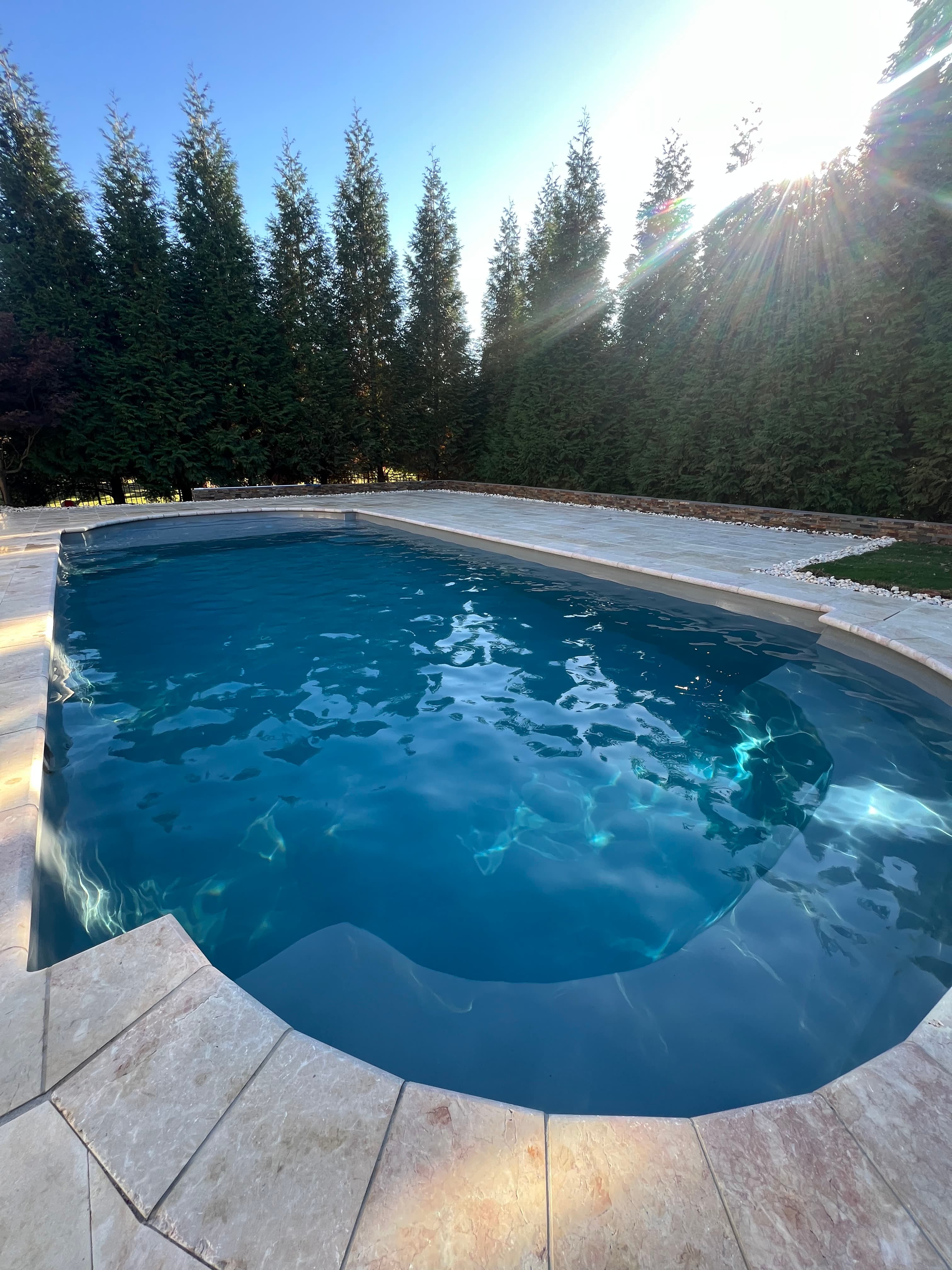
Cloudy pool water is not one diagnosis. Suspended material may be fine debris, dead organic matter, early algae, or minerals. Sometimes water chemistry is off; other times the filter is not removing what the sanitizer broke down.
Adding shock, clarifier, or baking soda before testing can waste time. Start with visibility, recent changes, a complete reading, and circulation.
Direct answer: Why is my pool cloudy? Most cases trace back to weak or ineffective sanitizer, an imbalanced reading, restricted filtration or circulation, a sudden contaminant load, early algae, or mineral precipitation. The right fix depends on which branch the evidence supports.
What Cloudy Pool Water Usually Means
A useful first step is to sort the problem into four cause families.
Sanitizer or chemistry
Low chlorine, high pH, an unfavorable stabilizer relationship, or another imbalance can reduce sanitation or push minerals out of solution.
Filtration or circulation
A loaded filter, weak return flow, a blocked basket, worn media, or an equipment fault can leave fine particles suspended.
Organic load or early algae
Rain, pollen, leaves, sunscreen, sweat, soil, and heavy swimming add material that pool filtration must remove.
Mineral precipitation
High pH, calcium conditions, fresh fill water, or certain treatments can create a pale or milky haze even when the pool is not green.
The appearance alone does not prove which one is responsible. Early algae can begin as dull water before it becomes visibly green. Mineral haze can resemble dead algae. Dirty media can also keep treatable particles in circulation. Use the timing and the water result together.
Can You Swim When the Pool Is Cloudy?
Clarity alone does not prove sanitation. Pool water can look clear and still need correction, but poor visibility creates its own safety problem.
Keep swimmers out when chlorine or pH is outside guidance for the system, the cause is unknown, contamination occurred, or a label requires a wait. When visibility and readings are acceptable, follow the installed-system and treatment guidance.
Use Timing and Appearance to Narrow the Cause
The strongest clue is often what happened just before the change. Cloudy water does not always mean algae. This module helps a homeowner choose the next check without pretending appearance can replace testing.
- It turned hazy after rain or wind
- Fresh water may have diluted readings while pollen, soil, leaves, and other excess debris raised demand. Check baskets, sanitizer, pH, return flow, and the filter.
- It became milky after shock or another chemical
- Fine dead material may still need filtration, or the treatment may have shifted pH or caused minerals to precipitate. Confirm the full result before adding more.
- It changed after a party or busy weekend
- Sweat, sunscreen, dirt, and a high swimmer load can reduce the active sanitizer reserve. Check free and total chlorine and inspect circulation.
- The chemicals appear balanced
- A strip may not show the full profile, the chlorine reading may be misleading, or filtration may be the limiting factor. Verify with a reliable method and inspect the setup.
- It keeps returning
- Repeated cloudiness points to unresolved demand, source-water conditions, filtration trouble, poor circulation, or an equipment fault rather than a one-time product shortage.
- The color is shifting toward green
- Move to the established algae branch instead of treating this as ordinary haze. Use the green-water guide and Green-to-Clean service page for that condition.
A saltwater swimming pool uses the same diagnosis order. A normal panel light or salt reading does not confirm that enough free chlorine is present, that the cell is producing correctly, or that circulation and the filter are keeping up.
Check Water Balance Before Adding More Chemicals
A useful test should cover free chlorine, total chlorine, pH, total alkalinity, stabilizer/CYA, and calcium hardness in the context of the pool surface and sanitizer type. Our guide to how the main pool readings work together explains those relationships.
Free chlorine is available to sanitize; total chlorine also includes combined forms. A gap can point to chloramines or contamination. High pH reduces chlorine effectiveness, while stabilizer changes the amount needed.
A strip that looks “fine” may be incomplete, faded, or outside its useful range. The CDC notes that DPD testing is more accurate than strips and that very high chlorine can bleach a test, producing a falsely low or zero result. Confirm surprising numbers before a large correction.
Calcium and pH matter when cloudy water looks pale or milky after treatment or fresh fill. Scale-forming conditions can push minerals out of solution. That is different from a low sanitizer problem, so another oxidizing treatment may not be the answer.
A complete result is not a universal dosing recipe. Pool volume, finish, product strength, recent additions, and equipment instructions affect the correction. Follow the label, add only what the measured condition supports, and never mix products.
How Pool Filtration Affects Water Clarity
Sanitizer handles germs and organic contamination; the filter removes particles left in the pool water. If either job is incomplete, the pool can stay dull after the original water chemistry problem improves.
Confirm the pump is running, baskets are empty, pool water is moving from the returns, and the gauge matches the equipment’s clean starting pressure. There is no universal pressure number because installations have different baselines.
Rising pressure can mean the filter has captured material and needs service. Very low pressure or weak return flow can point to low water, a blocked suction path, air intrusion, pump trouble, or another restriction. Normal pressure does not prove the media is sound; damaged or bypassing media may miss fine material.
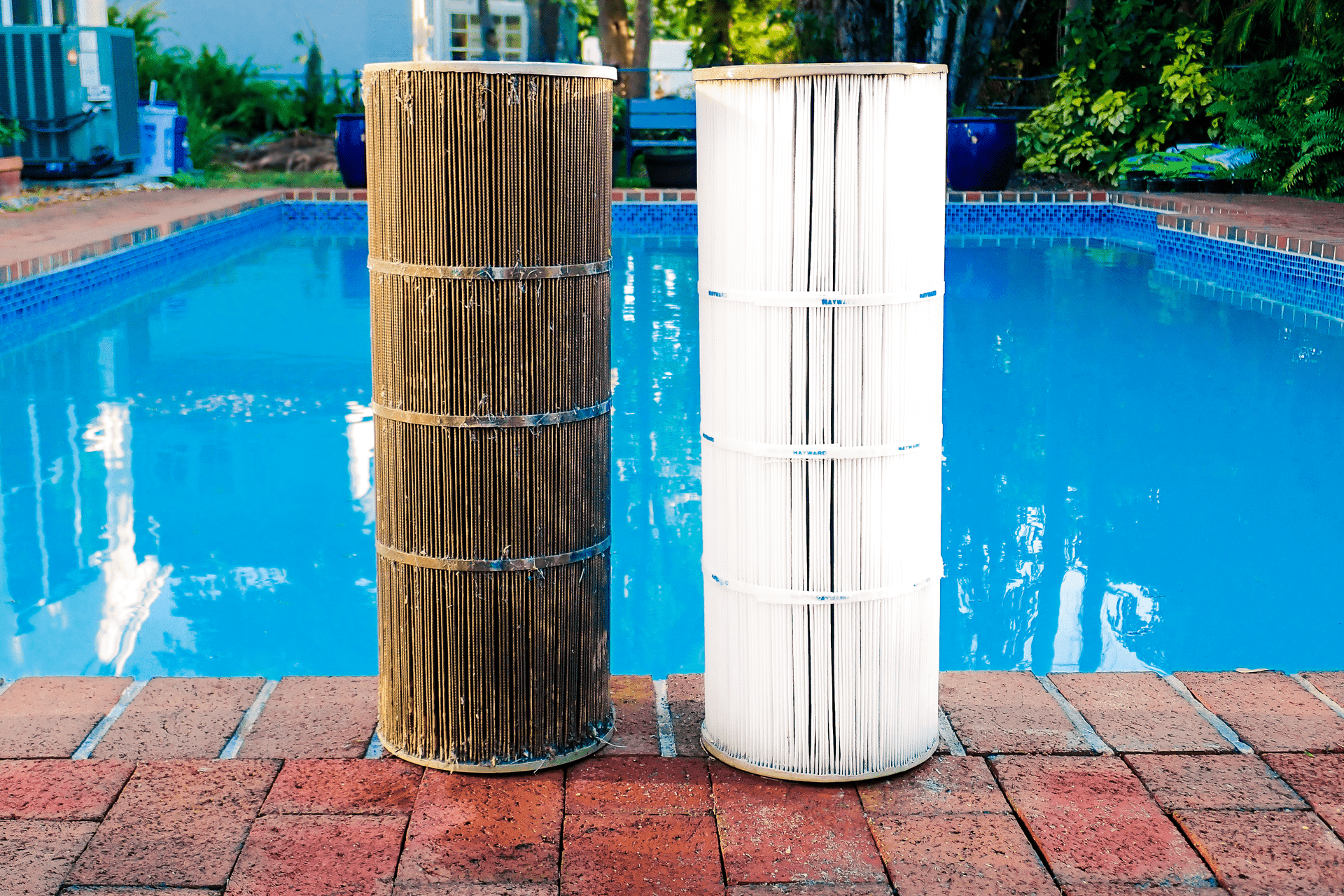
After algae or a heavy contaminant load is treated, the media may collect material quickly. One cleaning may not finish the job. Watch the baseline, flow, and water response. Dirty or bypassing media can leave the water hazy.
Do not open pressurized equipment or copy instructions for another model. Shutdown, pressure release, cleaning, and restart belong to the installed manual. If the filter is loaded, professional pool filter cleaning is the right lane. Abnormal pressure, flow, leaking, or pump behavior belongs with pool repair and equipment help.
Why Cloudy Water Appears After Shock or Chlorine
Shock is a treatment action, not a diagnosis. Cloudy water may look worse when dead algae and oxidized material become fine particles. Filtration, circulation, brushing, and vacuuming then do the visible part of recovery.
A different branch is mineral precipitation. Some treatment conditions raise pH or add calcium, and scale-forming water can turn milky. More chlorine does not remove that mineral cause. Testing pH, calcium hardness, and the larger water balance helps separate it from dead organic material.
The original demand may remain. If free chlorine falls quickly again, sunlight, stabilizer, debris, heavy use, active growth, or a feeder/generator problem may be consuming or limiting it. Confirm the result and inspect the equipment instead of repeating the same addition by habit.
If the water is becoming visibly green or growth is established on surfaces, use our guide to why green pool water keeps returning. An active bloom may need separately scoped Green-to-Clean service, not another generic cloudy-water fix.
Charlotte Weather and Swimmer Load
Charlotte-area pools can collect pollen, oak material, storm debris, and fine soil during spring and summer weather changes. Heavy rain can dilute sanitizer and alter the chemistry while runoff or wind adds contaminants. Hot sunny stretches increase chlorine loss, and a busy weekend adds sweat, sunscreen, body oils, and dirt.
These events do not call for the same product. Ask what changed: water volume, contaminant load, sunlight, circulation, or a chemical reading. Check baskets and surface debris, confirm chlorine and pH, and look at return flow and filtration behavior.
Recurring haze after every storm or high-use weekend suggests the pool has little reserve or the equipment is near its limit. Weekly pool maintenance can be the better solution when ongoing pool care and monitoring matter more than another one-time rescue.
When Pool Clarifier, Floc, or Shock Fits
Pool clarifier, flocculant, and oxidizing treatment do different jobs. They are not interchangeable shortcuts.
Clarifier
Clarifier groups very fine suspended particles into material a compatible filtration setup can capture. It may help after the cause is corrected and circulation is working, but overdosing or using it with the wrong setup can create more trouble. Follow the label and equipment instructions.
Flocculant
Flocculant gathers particles so they settle for removal, often by vacuuming to waste. That process depends on the plumbing, filtration type, ability to remove settled material without sending it back through the equipment, and the product directions. It is not appropriate for every pool.
Oxidizing treatment
An oxidizing treatment is appropriate only when sanitizer demand and product guidance support it. It does not restore restricted flow, repair equipment, or correct every mineral imbalance. Brushing and vacuuming remove material from surfaces and the floor; filtration removes suspended particles. Each action needs a reason.
Do not add another product just because the last one did not create immediate clarity. Retest, inspect the setup, and identify the unfinished job first.
A Test-First Plan to Restore Clarity
The goal is not the fastest chemical reaction. It is restoring reliable water clarity without stacking treatments or missing a mechanical problem.
1. Check visibility and pause swimming when needed. Keep people out if the floor or deep-end drain is not clearly visible, the readings are uncertain, contamination is possible, or a treatment label requires a wait.
2. Record what changed. Note rain, fresh fill, a party, new chemicals, a power interruption, recent equipment service, or a sudden pressure or flow change.
3. Remove the obvious load. Empty baskets, skim leaves and pollen, and address settled debris with the method approved for the pool and equipment.
4. Confirm the diagnosis. Review the main chemistry profile, repeat any surprising result, and compare it with the sanitizer type and recent history.
5. Inspect circulation and filtration. Check return flow, pump operation, the gauge relative to the clean baseline, and whether filtration needs safe service under its manual.
6. Correct one supported cause at a time. Use the measured volume, product label, surface needs, and equipment instructions. Never mix products or improvise a dose.
7. Allow the treatment and equipment to work, then retest. Recovery depends on the cause, particle load, media condition, circulation, and treatment. Judge progress by clear water and stable readings, not an overnight promise.
A slightly hazy pool after a storm is not the same job as a milky pool after treatment, active algae, or weak return flow. The sequence is consistent; the correction is not.
When a Cloudy Pool Needs Professional Help
Professional diagnosis makes sense when the floor is not visible, results conflict, the condition returns, chlorine disappears quickly, filtration loads repeatedly, or pressure and return flow change. It also helps when the next step may involve several products, draining, unfamiliar equipment, or a surface-specific balance decision.
The correct service depends on the evidence. Professional chemical balancing fits a one-time correction or recurring chemical-only need. Filtration service fits a restricted or overdue unit. Repair fits abnormal equipment behavior. Green-to-Clean fits an established bloom. Weekly service fits a pattern caused by missed cleaning, monitoring, or equipment checks.
Stop Guessing at the Next Chemical
We can check the full profile, inspect how water moves through the equipment, and point the problem to the right service instead of selling the same fix for every cloudy pool.
Or call (704) 985-2234.
No obligation. We’ll contact you within 24 hours.
Frequently Asked Questions
How do you clear up cloudy pool water?
Start by checking visibility, reviewing the main chemistry profile, removing debris, and inspecting circulation and filtration. Correct the diagnosed cause instead of automatically adding another chemical. Retest after the product and equipment instructions have been followed.
Will shock make the water clear?
Only when an actual sanitizer demand, contamination, or algae condition calls for it. That treatment will not repair weak flow, restore restricted filtration, or correct every mineral imbalance. Fine dead material may still need the filter, brushing, and vacuuming.
Can too much chlorine make the water cloudy?
A treatment can be followed by temporary haze from dead organic material or by mineral precipitation when pH and calcium conditions favor it. Very high chlorine can also interfere with some tests. Confirm the full result rather than assuming the sanitizer amount is the only cause.
How long does it take to restore clarity?
There is no honest universal time. A light contaminant load with healthy filtration may improve faster than active growth, mineral haze, or damaged equipment. Cause, particle load, circulation, media condition, and treatment all affect recovery.
What if the chemicals look balanced?
Verify the result with a reliable method and make sure the analysis covers more than a few basic lines. Then inspect baskets, return flow, pressure relative to the clean baseline, media condition, and equipment behavior. “Balanced” chemistry cannot compensate for poor filtration.
Can you swim if the water is only slightly hazy?
Stay out if the floor or deep-end drain is not clearly visible, the cause/readings are uncertain, contamination is possible, or a product label requires a wait. If visibility and readings are acceptable, follow the guidance for the actual sanitizer type and recent treatment.
Will baking soda or clarifying products fix it?
Baking soda raises total alkalinity and is useful only when the measured condition calls for it. Clarifier may help compatible filtration capture fine particles after the underlying cause is corrected. Neither is a universal cloudy-water treatment.
Why does the pool turn cloudy after rain or heavy swimming?
When cloudy water follows rain, dilution and new debris may be involved. Swimmers also add sweat, sunscreen, oils, soil, and other contaminants that use sanitizer. Check the pool water, remove the physical load, and inspect circulation and filtration before choosing the correction.